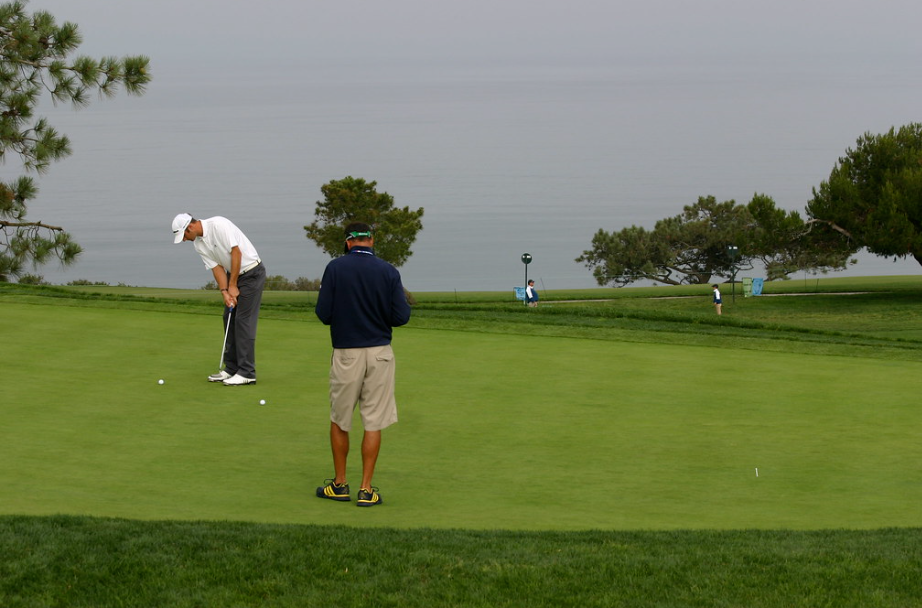
Golf at a great destination course is about far more than simply arriving for a tee time. The quality of the experience is shaped by the course itself, the conditions on the day, the way the round fits into the wider itinerary and, in many cases, the person carrying the bag alongside you.
An experienced caddie can add a layer of knowledge that is difficult to replicate from a yardage book or GPS device. They understand local conditions, preferred lines from the tee, subtle breaks on the greens and the strategic decisions that may not be obvious to a first-time visitor.
For golfers travelling to Scotland, Ireland and other established golf destinations, caddies also provide something less tangible: context. They can help bring a course to life through local knowledge, practical advice and familiarity with the way it should be played.
For GHW Golf Tours, caddie arrangements form part of the wider planning process. Availability, course policy, group requirements and the type of experience clients want all need to be considered alongside tee times, transport and routing.
Why Local Knowledge Matters
Many of the world's most memorable golf courses are also among the least straightforward to play for the first time.
Links golf is an obvious example. Firm turf, undulating fairways, pot bunkers, variable winds and unfamiliar sightlines can make the correct strategy difficult to judge. A shot that appears sensible from the tee may bring hazards into play, while the safest-looking route may leave a much more difficult approach.
A good local caddie understands those subtleties.
They know where a ball is likely to run, which side of a fairway provides the best angle into a green and when the prevailing wind behaves differently from what a golfer might expect. That knowledge becomes particularly valuable on courses where strategy is more important than raw distance.
Their contribution is not about making every decision for the golfer. It is about providing enough information to allow better-informed decisions throughout the round.
Course Management Becomes More Important Away From Home
Golfers are naturally more comfortable on courses they know. They understand typical landing areas, green shapes, danger zones and how the course tends to play in different weather conditions.
Destination golf removes much of that familiarity.
Playing a renowned course for the first time often means dealing with blind tee shots, unfamiliar bunker positioning and greens that may be approached very differently from those at a golfer's home club.
An experienced caddie can shorten that learning curve considerably.
They may recommend a more conservative club from the tee, identify a favourable side of the fairway or explain that a particular approach needs to finish short rather than pin-high. On exposed courses, they can also help interpret wind direction and how much it is likely to affect a shot.
These small decisions can make the round more enjoyable, especially when a golfer has been looking forward to playing the course for years.
Reading Greens and Understanding Local Conditions
Putting surfaces can vary enormously between destinations, courses and even different times of the year.
Green speed is only part of the equation. Grain, contours, prevailing slopes and exposure to wind can all affect how a putt behaves.
A caddie who works regularly at a particular course will have seen thousands of putts from the same areas. That experience allows them to identify breaks that may be difficult to detect during a first visit.
The same applies to general conditions.
Links courses can change character significantly depending on wind direction, firmness and recent weather. A caddie who understands how those conditions affect particular holes can help a player adapt much more quickly than someone relying solely on yardages.
For golfers travelling long distances to play a limited number of rounds, that local understanding can be particularly valuable.
The Human Side of the Experience
The role of a caddie is not purely technical.
For many visiting golfers, some of the most memorable parts of a round come from the conversations that take place between shots. Caddies often have years of experience at the course and a detailed understanding of its history, personalities and traditions.
That does not mean every golfer wants constant conversation. Experienced caddies generally understand when to offer advice and when to allow a player to concentrate on their game.
The relationship is different for every golfer.
Some want detailed strategic input throughout the round. Others prefer occasional guidance on lines, yardages and greens. Part of the skill of an experienced caddie is recognising that difference and adjusting accordingly.
On a well-planned golf tour, that personal element can make individual rounds feel more connected to the destination itself.
Caddie Availability Requires Advance Planning
Caddies cannot always be treated as something that can simply be requested on arrival.
Policies vary significantly between golf clubs. Some courses have established caddie programmes, while others operate with more limited availability. Demand can also be particularly high during busy periods, major events and peak visitor months.
Group size matters as well.
Arranging caddies for two golfers is very different from organising them for a larger travelling party. If several players want individual caddies across multiple rounds, requirements need to be considered early in the planning process.
It is also important to understand whether a course offers traditional caddies, forecaddies or another form of on-course assistance.
These distinctions can influence both expectations and logistics.
When GHW Golf Tours develops an itinerary, caddie requirements can therefore be considered alongside course access, tee-time availability and the wider schedule rather than being treated as an afterthought.
How Caddies Fit Into the Overall Itinerary
A premium golf tour should feel well paced from one day to the next.
That requires more than selecting strong courses. Tee times, transfers, accommodation locations, journey times and the physical demands of successive rounds all need to work together.
Caddie arrangements form part of that same picture.
For example, a golfer may want caddies on championship links courses where local strategy is particularly valuable but be comfortable playing independently elsewhere. Another group may prefer caddies throughout the tour to maintain a consistent level of support.
There is no single correct approach.
The important point is that these preferences are identified before the itinerary is finalised. That allows the course sequence, tee-time requests and associated arrangements to be planned coherently.
It also prevents unrealistic expectations at courses where caddie supply may be limited.
Professional Planning Removes Unnecessary Uncertainty
The most effective golf tour planning often concerns details that the golfer never needs to think about once the journey begins.
Caddie arrangements are a good example.
Course policies, availability, group numbers, seasonal demand and individual preferences can all affect what is practical. Coordinating those factors across several golf clubs requires local understanding and careful communication.
Professional planning helps establish what can reasonably be arranged before the tour begins.
It also allows alternatives to be considered where required. If individual caddies are unavailable at a particular course, a forecaddie or another option may still provide valuable local guidance.
GHW Golf Tours approaches these arrangements as part of the complete experience rather than as an isolated extra. The objective is to ensure that golf, accommodation, transport and on-course requirements work together naturally throughout the itinerary.
Not Every Round Requires a Caddie
A premium golf experience does not mean that every available service needs to be included.
For some golfers, playing independently is an important part of the enjoyment. Others may want caddie support only on particularly significant courses or where local knowledge is likely to have the greatest impact.
The right decision depends on the golfer, the course and the wider itinerary.
A first visit to a complex links course may be an obvious occasion to use a caddie. A more familiar style of course later in the tour may not require the same level of assistance.
Good planning is about understanding those distinctions rather than applying the same approach to every round.
A Small Detail That Can Make a Significant Difference
Caddies remain an important part of destination golf because they combine practical expertise with local understanding.
They can help golfers manage unfamiliar courses, read conditions more effectively and make better strategic decisions. Just as importantly, they often provide an authentic connection with the club and the region in which the round is being played.
Their role should nevertheless be considered in context.
Availability, course policy, group size and individual preferences all influence whether caddie arrangements are appropriate for a particular round. Those decisions are best made as part of the wider itinerary rather than once the tour is already underway.
For a carefully planned golf journey, it is often these smaller details that determine how smoothly the overall experience comes together.
For more information on luxury golf tours, visit: https://www.ghwgolftours.com/